
Journey to Kanekes: The Complete Baduy Travel & Trekking Guide
Step into a world free from modern gadgets. Here, you can discover timeless traditions, misty bamboo hills, and nail-free wooden homes. Also, learn how to start a smooth private tour straight from Kalicaa Villa Tanjung Lesung.
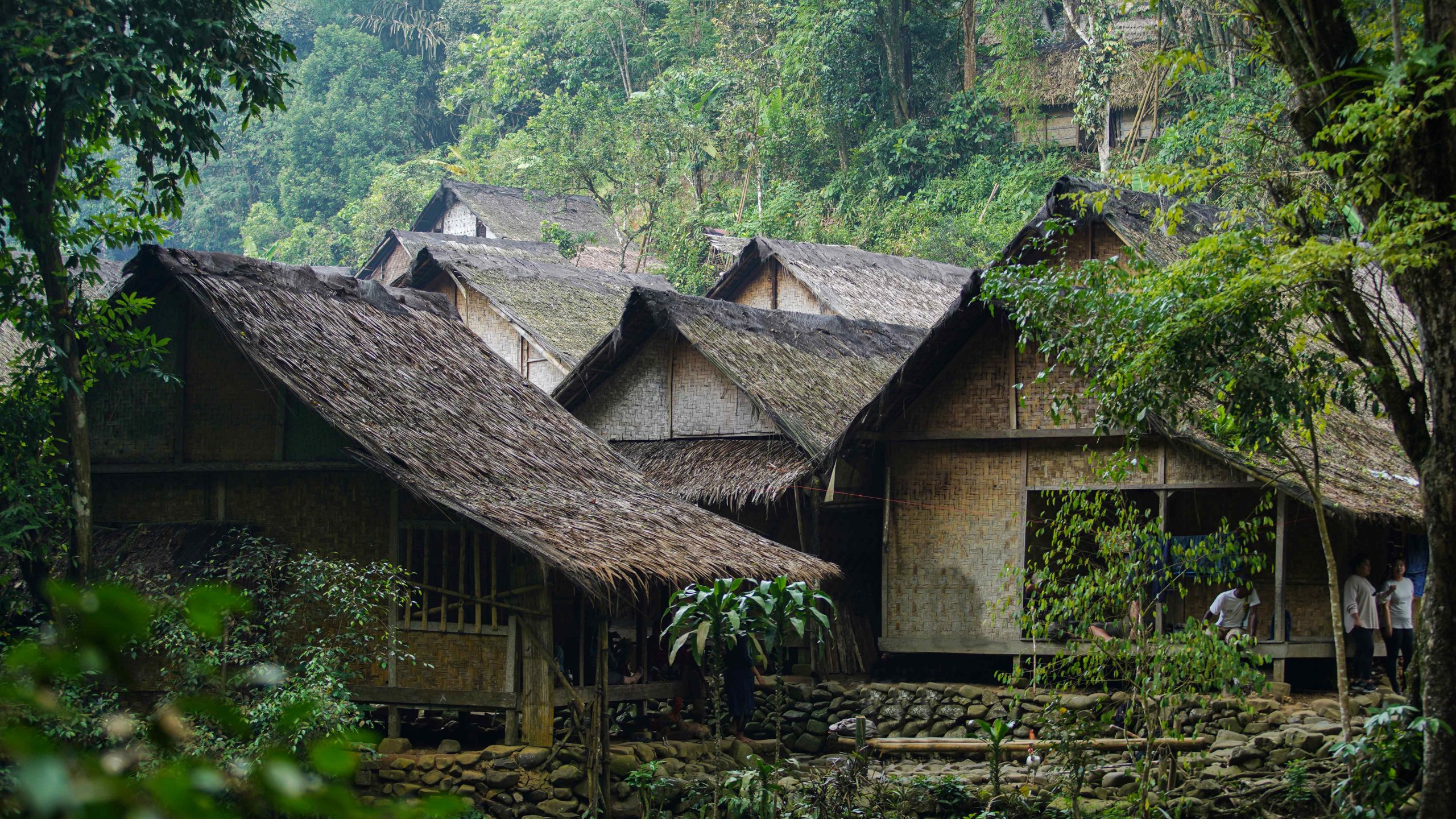
1. Inner Baduy (Baduy Dalam) vs. Outer Baduy (Baduy Luar)
First-time visitors often wonder about the difference between Baduy Dalam (Inner) and Baduy Luar (Outer). Both groups follow Sundanese Wiwitan spirituality. However, their daily routines and rules for visitors differ in several ways:
| Key Aspect | Outer Baduy (Baduy Luar) | Inner Baduy (Baduy Dalam) |
|---|---|---|
| Clothing Color | Dark indigo or black tunics with blue headcloths (Telekung). | Pure white handspun garments and white headbands. |
| Main Villages | Gazebo, Marengo, Kaduketug, and Balimbing (over 60 hamlets). | Three sacred villages: Cibeo, Cikertawana, and Cikeusik. |
| Cameras & Phones | Permitted for photos and friendly video clips. | Strictly Prohibited by ancestral decree (Pikukuh). |
| Foreign Visitors | Warmly Welcomed with standard guest registration. | Restricted strictly to Indonesian citizens by custom. |
| Footwear & Transit | Sandals or shoes are fine. Cars can reach the outer gate. | Locals walk barefoot. No wheeled vehicles may enter. |
| Lighting & Tech | Some outer homes use simple solar lights at night. | Zero electricity. Only natural resin and oil lamps give light. |
Photo Gallery: Life in Kanekes
Authentic scenes captured across Outer Baduy trails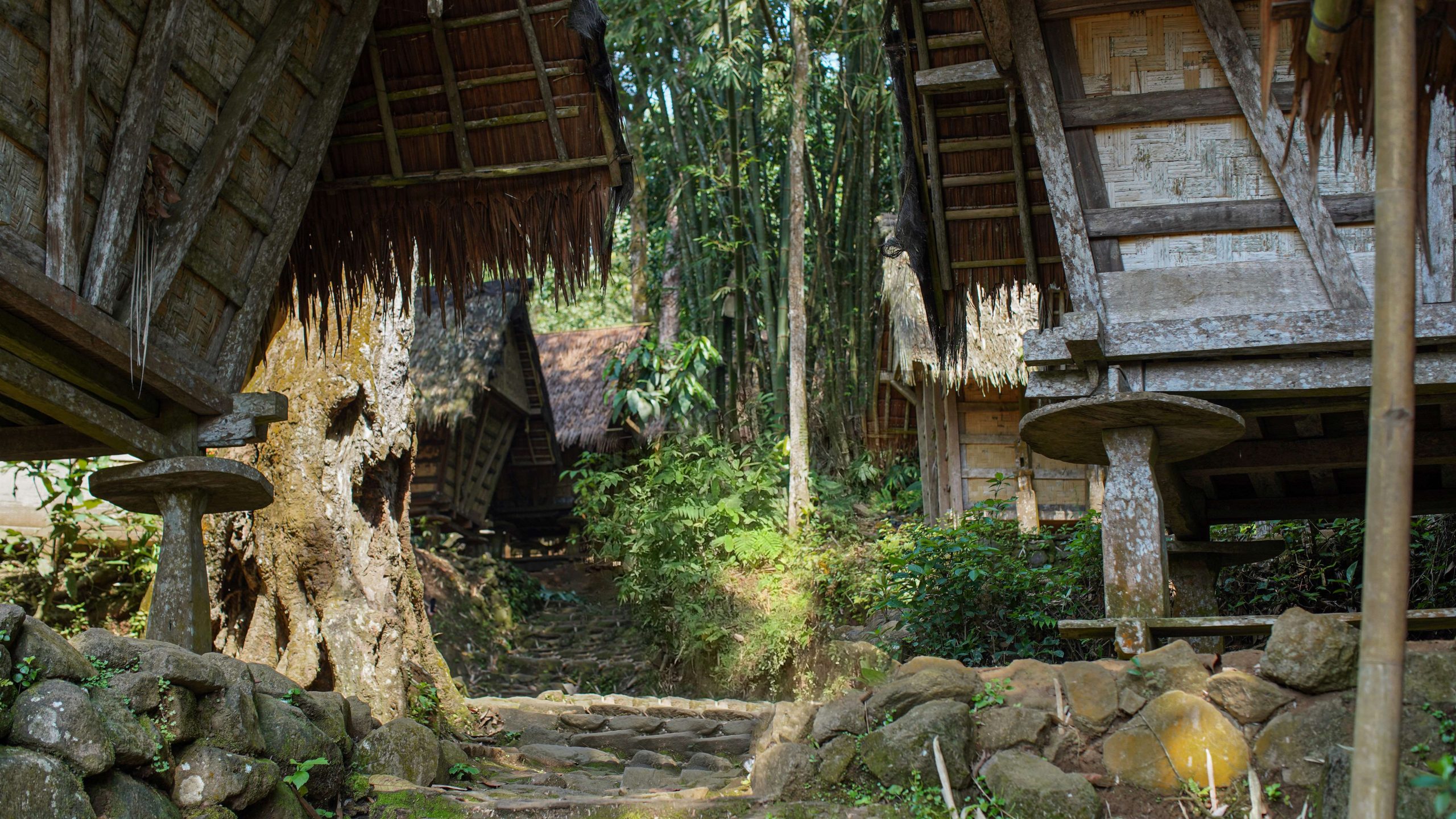
Heirloom Granaries (Leuit) & Stone Paths
Raised wooden rice barns stand on stilts with circular wooden discs. Next to them, hand-laid riverstone paths wind gently without any cement.
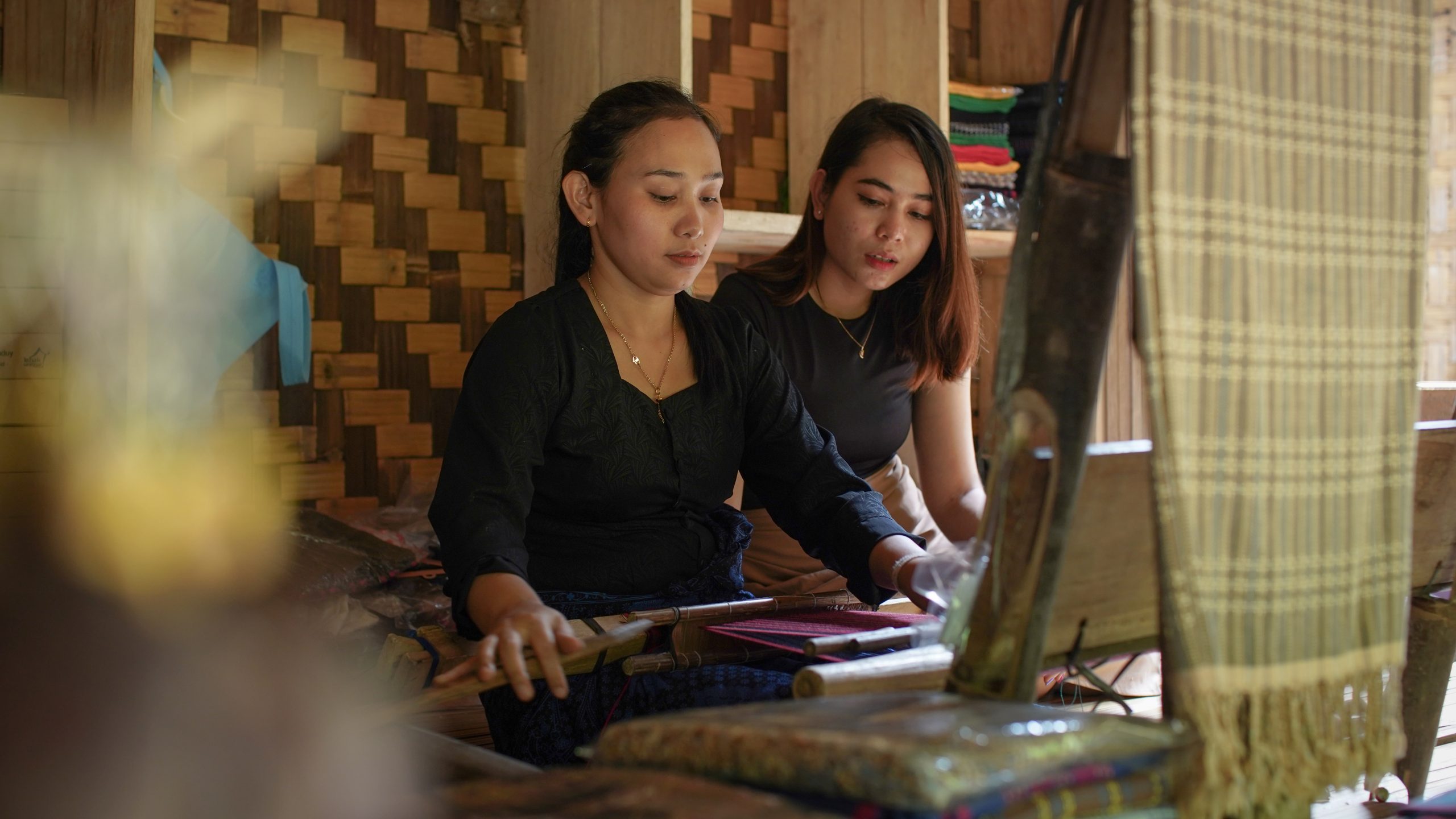
Living Craft Immersion
Visitors sit with local weavers on breezy bamboo verandas. Here, travelers learn the meticulous rhythm of traditional backstrap handloom weaving.
2. Choosing Your Trekking Route: Ciboleger vs. Cijahe
You can enter the Kanekes cultural reserve through two primary gateways. Therefore, pick the route that fits your schedule and physical comfort:
Route 1: Via Ciboleger Terminal
This classic trail starts from the main northern village terminal. Along the way, it leads through key Outer Baduy artisan villages like Kaduketug and Gazebo.
- Distance: About 11 to 13 km of rolling trails.
- Highlights: Bamboo footbridges, craft stalls, and river views.
- Best For: Active walkers who want the full cultural journey.
Route 2: Via Cijahe Ridge
This shorter ridge trail starts close to the eastern border. Consequently, it saves walking time while offering broad views across misty hills and clove farms.
- Distance: Around 4 to 5 km of easier walking.
- Highlights: Forest panoramas, cool springs, and simple paths.
- Best For: Families, photographers, and relaxed day trips.
3. Heritage Handcrafts: Natural Weaving & Forest Treasures
In Outer Baduy villages, daily life revolves around organic farming and skillful handcrafts. For example, artisans make all items by hand without plastic or modern factory tools:
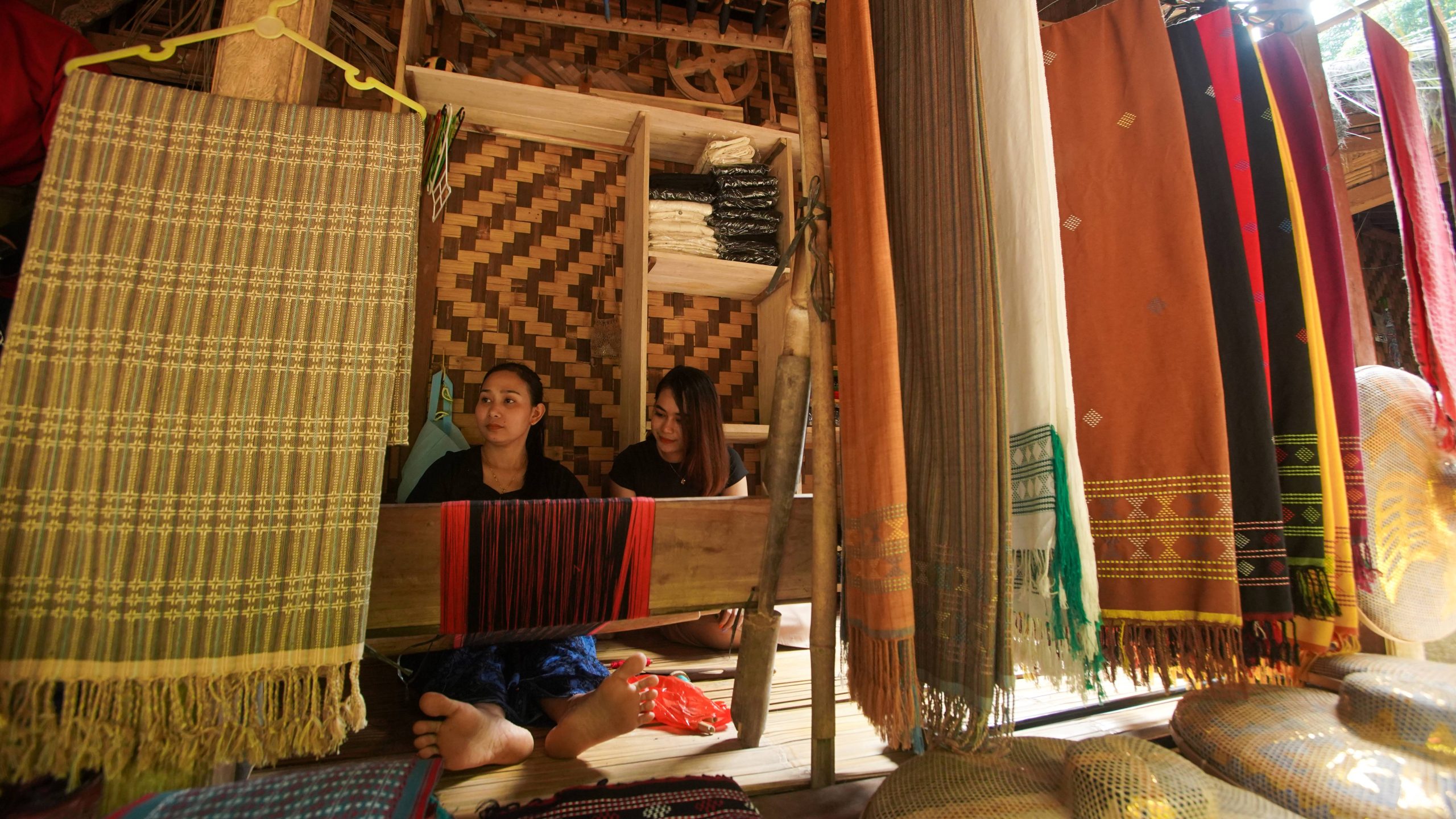
Backstrap Handloom Weaving (Tenun)
Outer Baduy women weave cotton sarongs and scarves on wooden backstrap looms. Moreover, they use natural forest dyes inside their homes.

Handwoven Heritage Textiles & Crafts
Bright hand-spun fabrics, headcloths (Telekung), and wild honey hang along village porches. Visitors can purchase these directly to help local families.
Authentic Souvenirs to Support Local Families:
4. Traveler's Checklist: What to Pack
Thoughtful packing ensures a comfortable and pleasant trek. Because Kanekes has no convenience stores or modern pharmacies, remember to pack these key items:
Footwear & Clothes
- Wear trail shoes or sports sandals with grippy rubber soles.
- Choose breathable cotton shirts. Also, avoid flashy outfits.
- Pack a lightweight rain poncho for quick mountain showers.
- Bring a sunhat and sunglasses to stay comfortable outdoors.
Power & Gear
- Carry a good headlamp or flashlight for night paths.
- Bring a charged power bank to keep batteries ready.
- Use a waterproof pouch to protect sensitive devices from rain.
- Switch phones to silent mode to respect village quietness.
Cash & Hydration
- Bring small cash bills. Note that no ATMs exist inside the reserve.
- Carry at least 1.5 liters of drinking water per person.
- Pack personal blister plasters and soothing herbal balm.
- Keep a small trash bag to bring every wrapper back.
5. Sacred Adat Rules: Etiquette for Every Visitor
The Kanekes people cherish a core wisdom: "Lojor henteu beunang dipotong, pondok henteu beunang disambung". In plain words, it means that nature must stay intact. Therefore, following local rules shows respect for their heritage:
Respectful Do's
- Hire an Authorized Native Guide: A local Kanekes guide keeps you on the right trail and introduces you warmly to village elders.
- Carry All Trash Back: Pack every snack bag, plastic bottle, and wrapper back to town. Leave only clean footprints.
- Ask Before Taking Pictures: Always greet and politely ask villagers in Outer Baduy before taking close-up portraits.
- Offer Polite Greetings: A warm Sundanese greeting like "Sampurasun" (answered with "Rampes") always earns friendly smiles.
Strict Prohibitions (Don'ts)
- No Photos in Inner Baduy: Never use cameras, drones, or smartphones inside Cibeo, Cikertawana, or Cikeusik. Keep all devices stored away.
- No Soaps in Rivers: Never wash with chemical soap, shampoo, or detergent in natural rivers or communal water spouts.
- No Loud Music or Speakers: Portable Bluetooth speakers, guitars, and shouting are prohibited across all village zones.
- Do Not Damage Forest Flora: Plucking plants, picking wild fruit, or breaking branches inside the reserve is strictly forbidden.
Private Baduy Heritage Tour from Kalicaa Villa
Experience Kanekes with seamless comfort from door to door. Depart directly from your private pool villa in an air-conditioned car with a friendly native guide. Afterwards, return in time for an oceanfront sunset dinner at Kalicaa Villa.
Frequently Asked Questions: Visiting Baduy
Quick answers to common questions about traveling to the Baduy cultural territory.